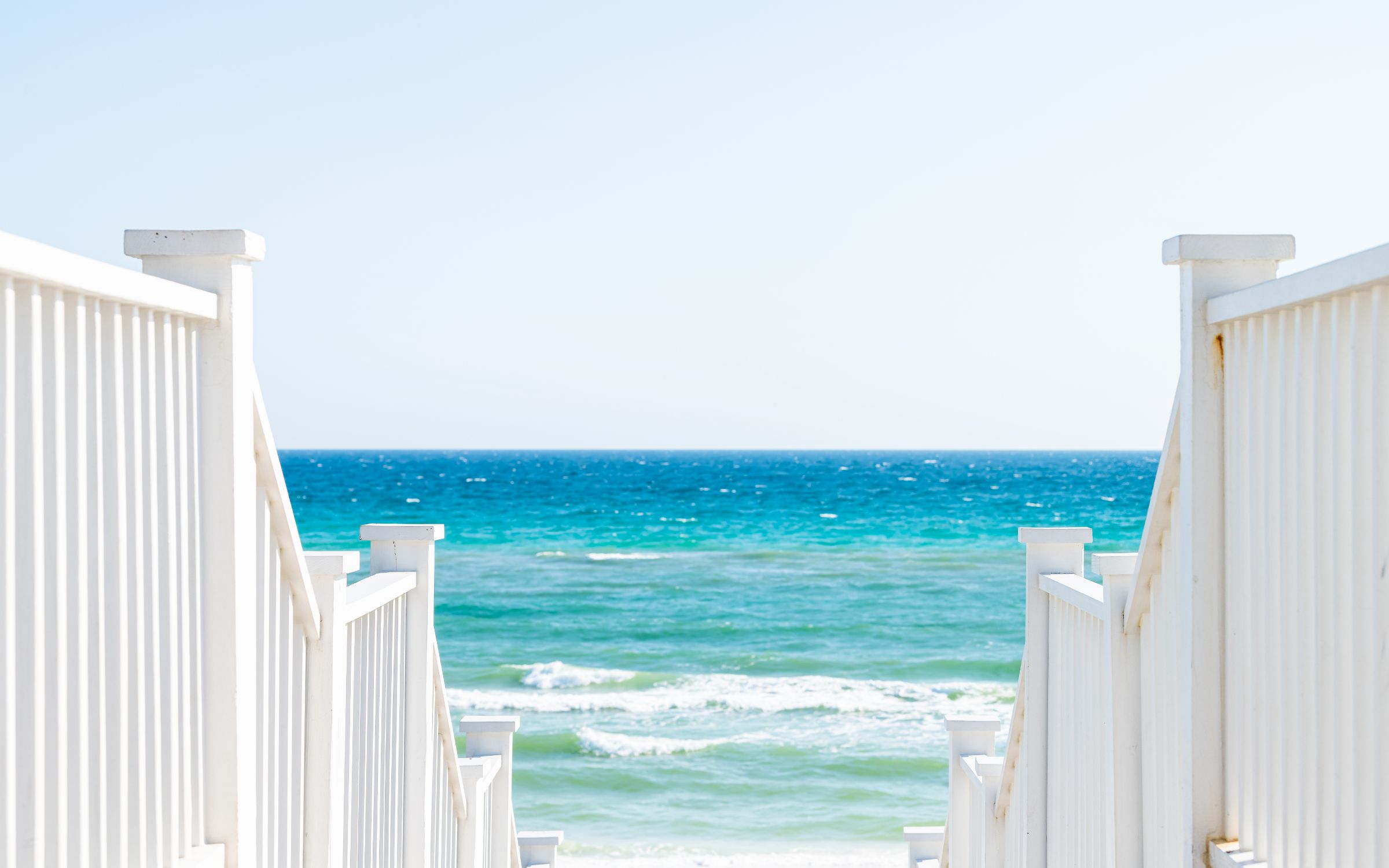
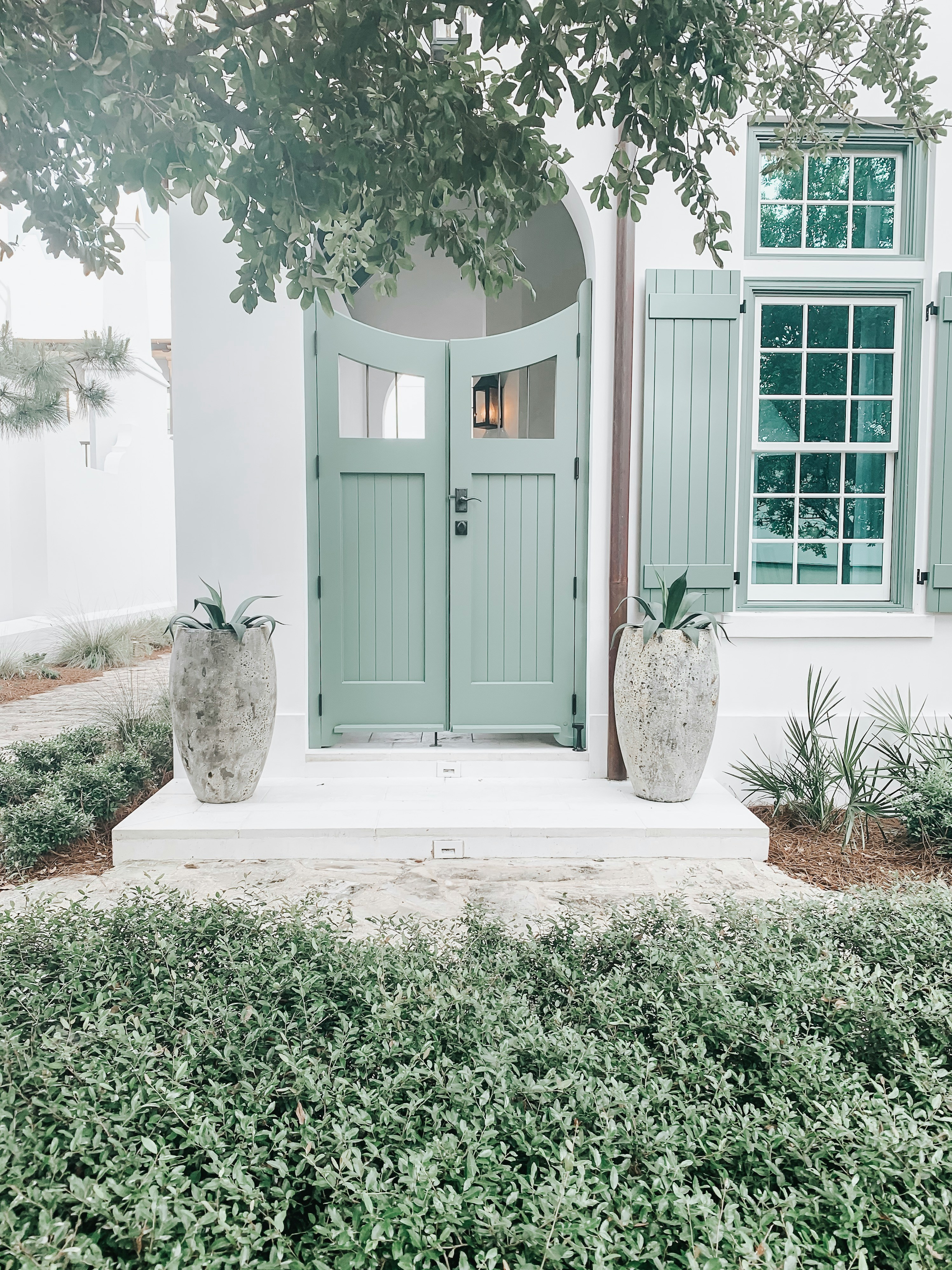
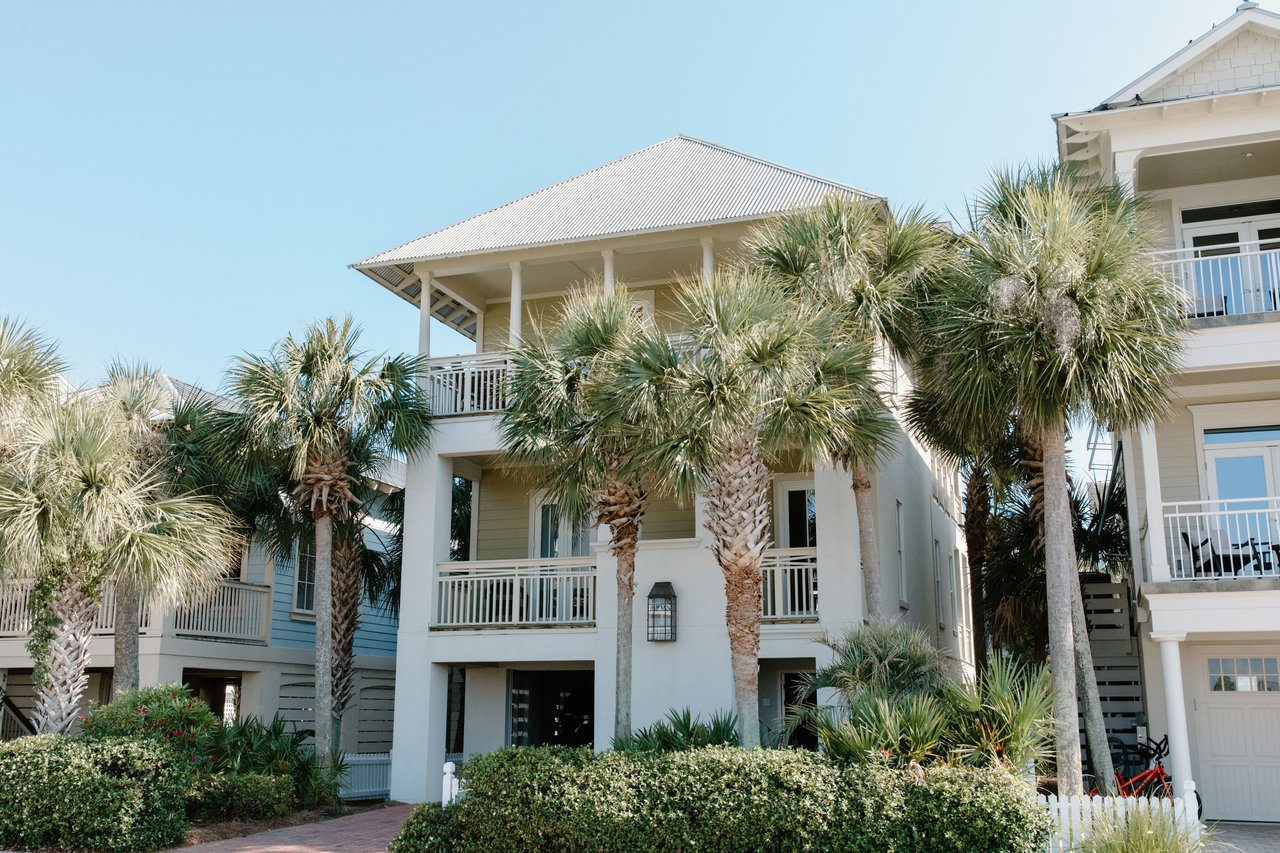
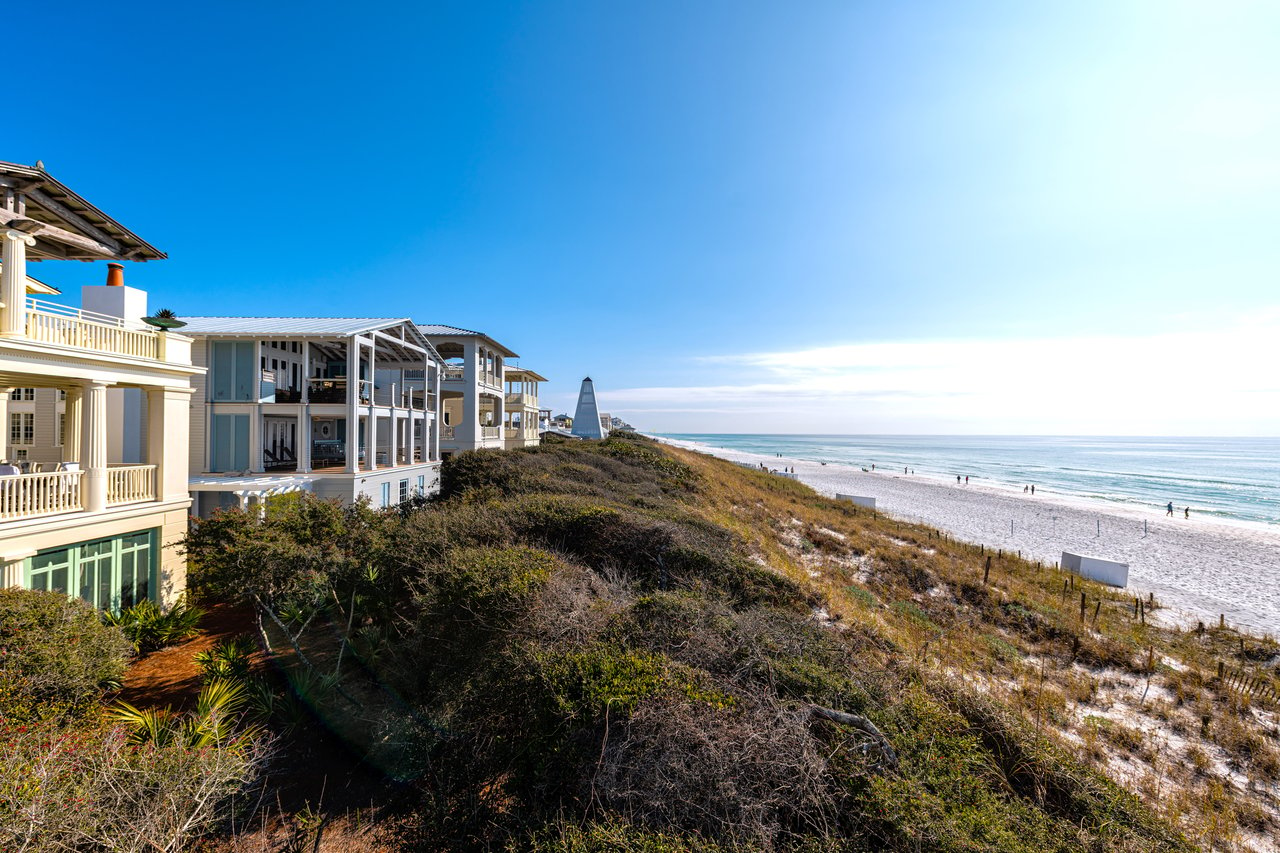
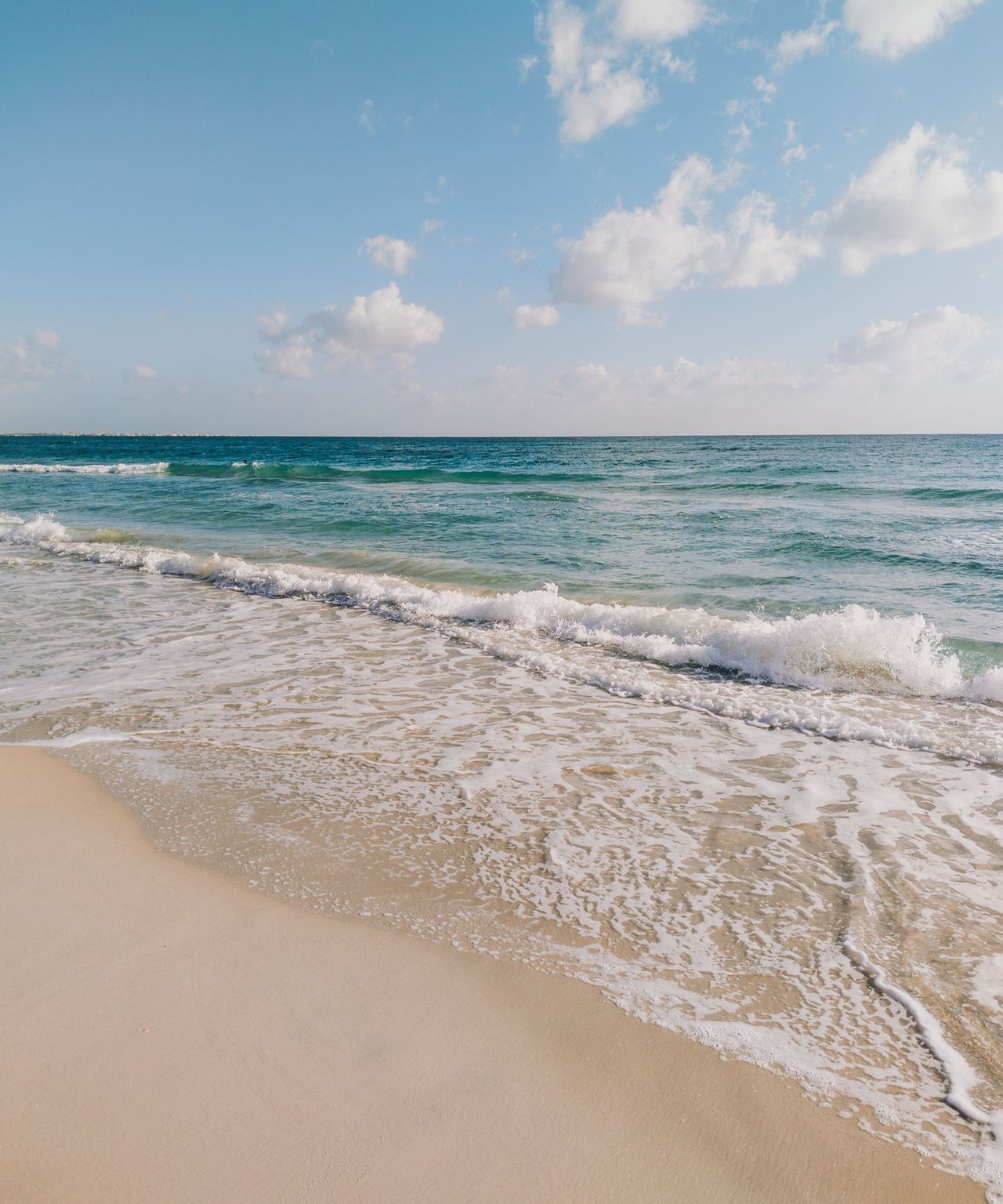
To understand where Scenic Highway 30A is going, we have to look closely at where it started. Long before the modern master-planned communities and the golf carts, this 28.5-mile stretch of the Northwest Florida coast was a rugged, isolated wilderness. It was a landscape defined by towering longleaf pines, blindingly white quartz sand dunes, and rare coastal dune lakes that the outside world didn’t even know existed.
The story of 30A is not a tale of corporate expansion. It is a story of independent thinkers, artists, and families who saw something sacred in this land and chose to build with artistry, intention, and a deep respect for the natural environment.
Regional Heritage
The transformation of South Walton County didn’t happen overnight. It evolved in distinct eras, shifting from a remote homesteading outpost to the birthplace of global architectural movements.
The unique character of 30A stems from the fact that it grew organically, pocket by pocket, rather than being cleared all at once by a single developer.
1885
The anchor of the West End. Early homesteaders like Major Charles T. Gray and William Henry Harrison settled here for the abundant fishing. In the 1920s, Van R. Butler took over the mantle of protecting the town’s independent spirit, ensuring the grand live oak trees remained untouched.
1949
C.H. McGee Sr. envisioned a classic, unhurried retreat for families. He built simple concrete block cottages tucked under the thick canopy of native scrub oaks. McGee’s legacy of deep lots and a neighborhood-first layout remains the blueprint for the core of Seagrove today.
1981
Robert Davis wanted to recreate the old-fashioned family summers of his youth. By banning private fences, requiring front porches close to the sidewalks, and mandating central town greens, Seaside proved to the world that pedestrian-first design could create a happier, more connected way of living.
1995
Architects and town planners took the lessons learned at Seaside and scaled them for the East End. Using native boardwalks instead of concrete sidewalks and establishing nine private beach pavilions, Rosemary created an enclave that behaves like a quiet European village.
2004
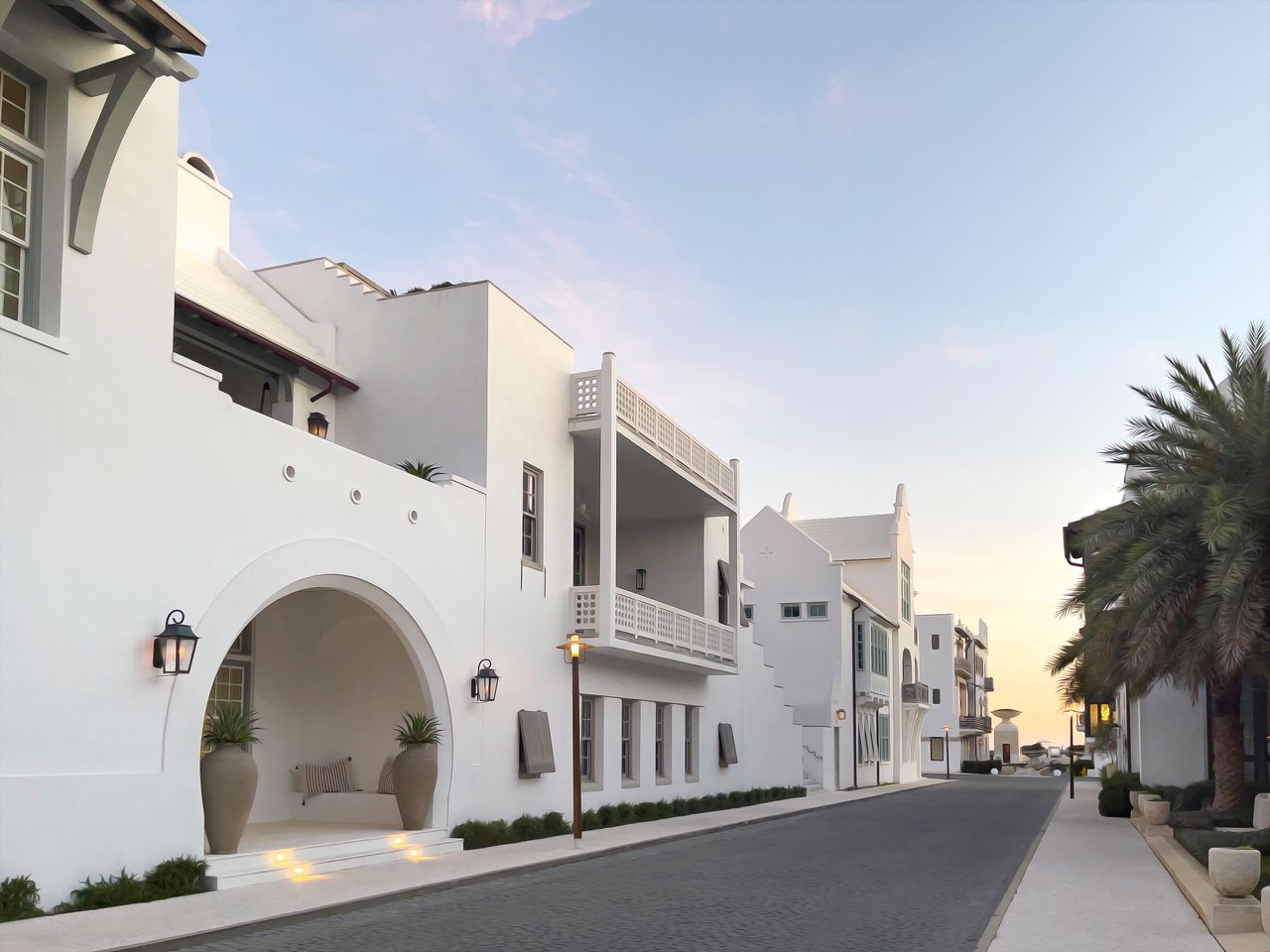
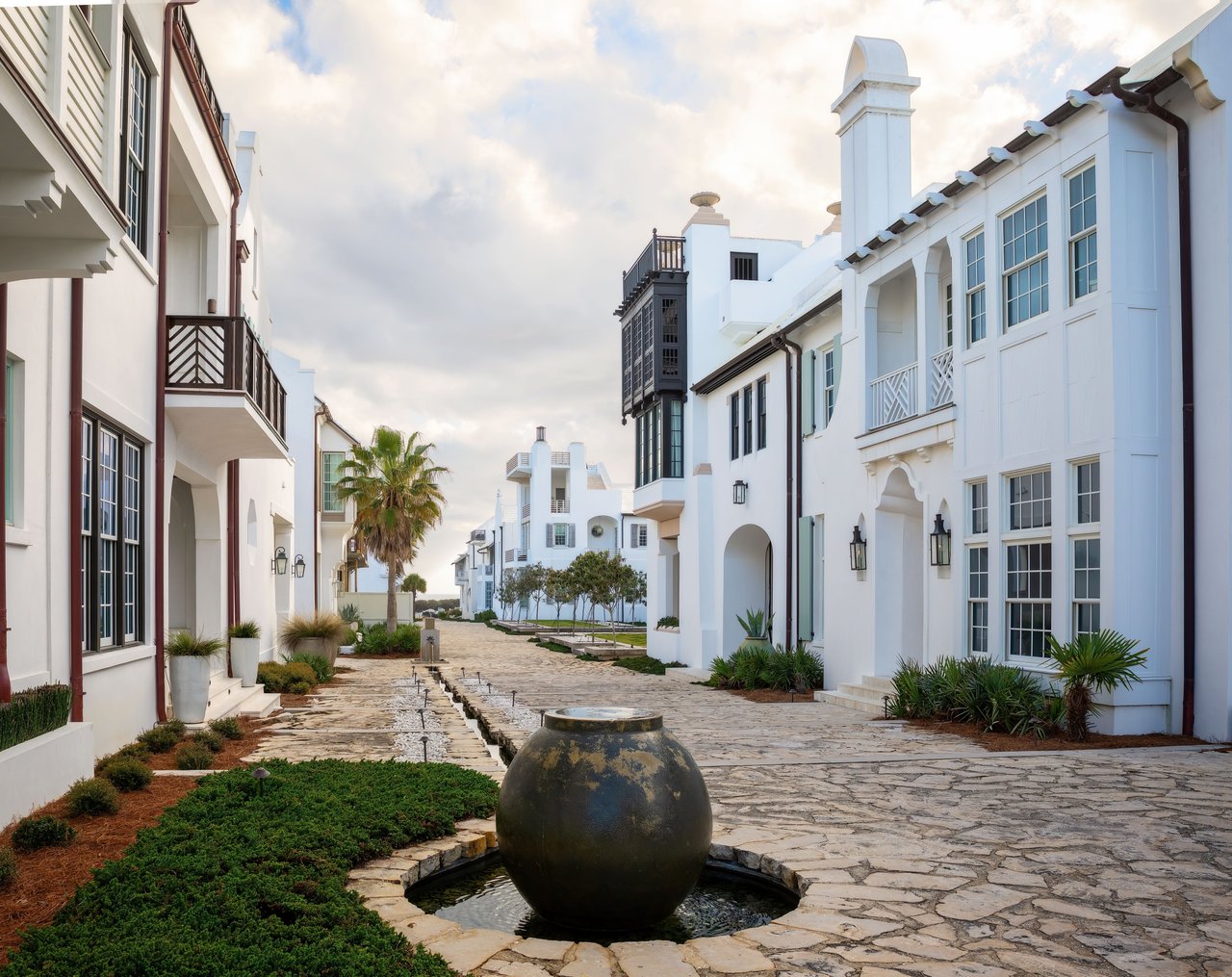
The Stephens family sought to create an enduring architectural masterpiece. By utilizing stark white, sustainable masonry structures designed to withstand the elements for centuries, Alys Beach set a new global benchmark for coastal luxury and structural integrity.
Infrastructure
Before 30A became a cohesive community, it was separated by wide expanses of wetlands and coastal dune lakes. The paving of the road and the cutting of the connector roads changed everything.
The appreciation of 30A real estate is a direct reflection of the market recognizing a finite resource. Because the corridor is tightly bound by state parks, the gulf, and a massive state forest, the land supply is strictly capped.
Late 1990s
The million-dollar threshold was first broken by direct Gulf-front properties in Old Seagrove and the emerging town center of Seaside. It was the moment the region shifted from a hidden regional secret to a legitimate national luxury market.
Mid-2000s
Prior to the 2008 market correction, premium parcels on the Gulf in Rosemary Beach and expansive gulf-front acreage in Grayton Beach broke the $5 million mark. Buyers began valuing the architectural craftsmanship of the homes just as much as the beachfront sand.
Mid-2010s
As inventory became increasingly scarce, single-family legacy estates with wide Gulf footprints on the East End began commanding double-digit millions. This era marked the arrival of ultra-high-net-worth families looking to park wealth in multi-generational real estate assets.
2020
The global shift toward privacy and wellness accelerated the market dramatically. An estate within the exclusive, non-rental enclaves on the East End broke the $20 million mark, solidifying 30A as a premier coastal luxury market on par with the Hamptons and Malibu.
Late 2025
The absolute peak of historical value occurred with a record-shattering sale reaching $41,000,000 in an elite, private enclave on the eastern edge of the corridor. This landmark transaction proved that the combination of private acreage, pristine Gulf views, and total insulation from commercial traffic carries an unmatched global premium.
Community Legacy
The history of 30A is not just a collection of dates and real estate data points. It is a living, breathing heritage that we are actively trying to protect. Every time a property owner chooses to build with architectural character rather than maximizing a rental algorithm, they honor the work of Van R. Butler, C.H. McGee, and Robert Davis.
We look at this history not out of simple nostalgia, but as a roadmap for our stewardship. The past proves that when you prioritize human connection, natural preservation, and local artistry, you build a community that stands the test of time.
If you are ready to become a part of the ongoing story of this coast, let’s sit down and grab a cup of coffee. The next chapter is yours to write.
Next Frontiers
We will likely see the first $50 million transaction within the next 24 to 36 months.
When we look at the trajectory of 30A real estate, we are no longer looking at a standard housing market. We are looking at a market driven by absolute scarcity.
The record-shattering $41,000,000 sale in Paradise by the Sea proves this. What shook the market wasn’t just the number—it was the fact that the buyer bought a 9,000-square-foot luxury home just to tear it down. They paid for the dirt and the 180 linear feet of private Gulf frontage.
When land becomes the primary asset and the structure becomes optional, the path to the next pricing thresholds becomes a matter of math and time. Here is how the numbers break down from a grounded, local perspective.
The $41 million sale wasn’t an anomaly; it was a land play. The buyers plan to redevelop the site. By the time you clear that land, engineer a modern fortified structure, and install today’s ultra-luxury specifications, the total capital invested will naturally push right against the $50 million mark.
Furthermore, look at the recent $28 million cash sale in Alys Beach. That property sits on a single lot with 53 feet of frontage. The moment an ultra-high-net-worth buyer decides they want a completed, turnkey masterpiece on a double lot in Alys Beach or Paradise by the Sea—bypassing the painful three-year design and construction pipeline—the market will clear $50 million without blinking.
Future Projections
Hitting $100 million requires an entirely different asset class. This shifts 30A out of regional luxury and puts it on the exact same global stage as Palm Beach, Malibu, and Port Royal. For this to happen, the market needs time: compounding land value and a massive shift in scale.
You cannot cross $100 million on 30A with a standard lot, no matter how beautiful the marble is. It requires massive lot consolidation.
To reach a nine-figure valuation, a buyer would need to assemble a private compound spanning at least 250 to 300 linear feet of direct Gulf frontage with complete gated seclusion. Because almost the entire corridor is already subdivided into 50-foot and 80-foot parcels, finding or creating an un-subdivided historical parcel of that size is incredibly rare.
It will take about ten to fifteen years of intense scarcity compounding, inflation, and global wealth migration for the dirt value alone to justify a $100 million transaction.
The Catalyst: A true generational compound—likely an institutional-scale private fortress featuring multiple guest houses, detached wellness pavilions, and an unprecedented amount of contiguous, private beachfront sand.
As advisors, watching these numbers climb is fascinating, but it also reinforces why we have to fight so hard for the soul of this coast. When a market starts flirting with $50 million and $100 million price tags, the temptation to treat the entire area as a commodity skyrockets.
Our job is to remind people that the true value of 30A isn’t found in breaking records or chasing lines on a chart. The real luxury will always be the slow mornings, the barefoot walks, and the community we build with the people we love. The numbers will do what they do—but we are here to make sure the neighborhood stays human.